Time and again, travel decisions in Saudi Arabia are influenced by social media and travel content creators. Studies show that influencer credibility and interaction with followers strongly affect travel intention among Saudis, with creator trust being a major facet in how people respond to travel content and plan trips. (Research Gate)
Hence, travel brands and marketers in the KSA are increasingly adopting influencer marketing for tourism in Saudi Arabia to capitalize on the influence and pre-established credibility of travel influencers to acquire new audiences and gain consumer trust.
At the same time, influencer marketing for hotels in Saudi Arabia has propelled, which has led it to become more competitive and difficult to crack into. On top of that, travel brands, hotels, destination management companies, tourism boards, and brands adjacent to the travel industry are now building creator campaigns with specific KPIs, audience segmentation, content deliverables, and attribution models.
Needless to say, the planning process now demands specialized knowledge and expert guidance to handle all aspects of budget distribution, platform choice, creator selection, etc. Thus, travel brands are seeking to partner with the top influencer marketing company in Saudi Arabia to leverage their expertise, decade-long experience, resources, and industry knowledge to execute ROI-focused influencer campaigns.
That being said, a clear direction and a strong grasp of travel influencer marketing are necessary before launching a campaign. To begin with, let us first understand the core benefits of influencer marketing for travel companies.
Benefits of Influencer Marketing for Travel Brands in Saudi Arabia
1. Helps Target Niche Travel Segments
Most importantly, travel influencer marketing helps bring precision to audience targeting. Each destination attracts different traveller profiles, say, luxury desert retreats in AlUla attract luxury travelers, curated coastal stays near The Red Sea Project’s ideal audience are couples, and family experiences in Riyadh target couples with kids, and the best part is that creators already command the attention of these communities. Travel brands gain access to audiences of clear interests, cultural preferences, and defined spending capacity. This way, campaigns reach people who are already inclined toward the experience.
2. Speeds Up Destination Discovery and Shortens Decision Cycle
Influencer content shortens the time it takes for a destination to move from unfamiliar to desirable. It introduces destinations to travellers at the exact moment they are most receptive, while browsing, saving, and planning within social platforms. Beautiful visuals, real-time experiences, and practical details such as pricing cues or itinerary highlights reduce hesitation, moving audiences from discovery to consideration, and from consideration to booking with far less friction.
3. Drives Direct Bookings Through Visual Storytelling
Visual storytelling removes ambiguity from the booking decision. Detailed room tours, dining experiences, activity walkthroughs, and candid guest moments allow travellers to picture themselves in the setting, which strengthens purchase intent. When the experience feels tangible and complete, the gap between interest and reservation becomes smaller.
4. Strengthens Word-of-Mouth Across GCC and Global Markets
Travel decisions are rarely made in isolation as recommendations carry weight, especially across close-knit GCC communities and diaspora networks. Influencers act as trusted reference points, and their experiences help circulate through shares and saves. This ripple effect extends a brand’s reach organically into regional and international markets where peer opinion guides destination choice.
5. Activates Peak Demand and Stabilizes Off-Season Booking Gaps
Influencer campaigns can be timed to amplify high-traffic periods such as festivals, long weekends, and major sporting events, accelerating booking momentum when demand is already building. The same approach can be recalibrated for quieter months, highlighting staycation packages, weekday offers, and experience-led escapes that appeal to domestic and regional travellers. This dual strategy supports stronger occupancy patterns across both peak and low travel periods.
As travel brands sharpen their strategy, understanding the current influencer marketing trends influencing Saudi Arabia’s tourism sector becomes equally important.
Trends in Travel Influencer Marketing in KSA
1. Nano and Micro-Influencers for Hyper-Targeted Reach
Travel brands are increasingly collaborating with nano and micro influencers in KSA who maintain tightly defined and highly engaged audiences. Their smaller but focused communities allow hotels, tour operators, and destinations to speak directly to specific traveller segments, which results in stronger trust and higher intent.
2. Short-Form Video Dominates Travel Discovery
Short-form video has become the primary format through which travellers discover new destinations and experiences in Saudi Arabia. Quick, immersive clips across platforms allow brands to showcase atmosphere, scale, and real experiences in seconds, attracting attention early in the planning phase and shaping initial travel interest.
3. Demand for Experience, Unfiltered Narratives
Audiences in Saudi Arabia are responding more strongly to travel content that feels candid and lived-in rather than overly polished. Honest walkthroughs, unscripted reactions, and practical details about service, atmosphere, and accessibility build credibility, making the destination feel attainable and trustworthy.
4. Cross-Platform Journeys
Don’t just stop after a few collabs on one platform. Travel audiences move between short-form video, in-depth reviews, and daily story updates before making a decision, so brands that structure influencer campaigns across multiple platforms and touchpoints create a more cohesive and persuasive discovery path.
With these shifts in audience behaviour in mind, let us look at a real campaign example that shows how these trends help create a successful campaign in the Saudi travel market.
A Successful Travel Influencer Marketing Campaign in Saudi Arabia
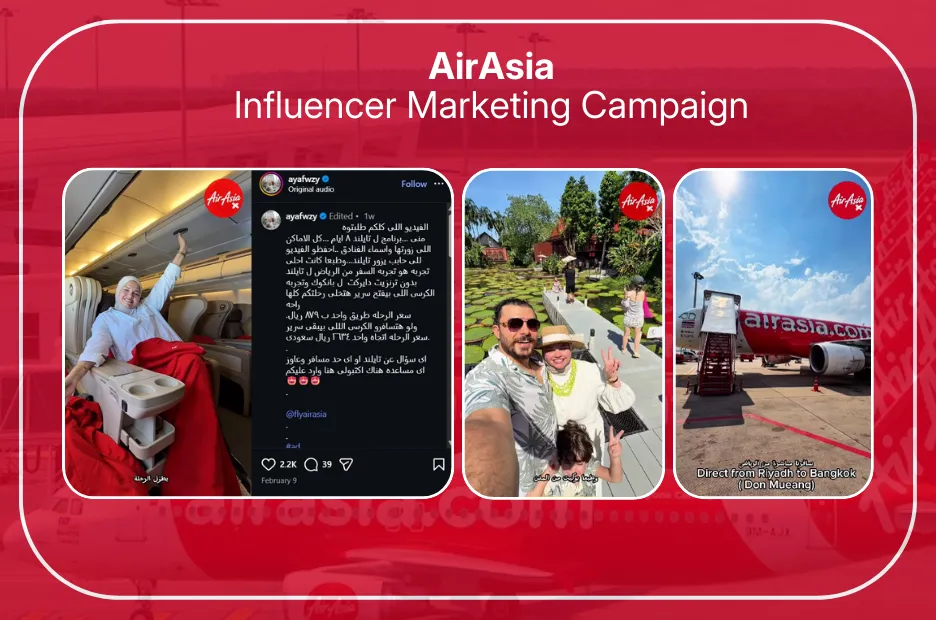
AirAsia partnered with Aya Fawzy, a leading travel influencer in Saudi Arabia, to execute an ROI-oriented travel influencer campaign.
Objective- The goal was to position AirAsia as a comfortable, family-friendly airline option for Saudi travellers planning international holidays. The focus was on affordability and in-flight comfort through relatable storytelling.
Content- Through a series of Arabic-language reels, Aya Fawzy documented her family’s end-to-end travel experience, from boarding to exploring Thailand, in which she seamlessly integrated AirAsia within her narrative. The airline was integrated naturally as comfortable and child-friendly travel to create high contextual relevance.
Results- The collab was a huge success and generated close to 1 million cumulative views, i.e., strong reach within the target audience. Additionally, high engagement indicates audience resonance and success in positioning AirAsia among Saudi family travellers.
That said, brands aiming to achieve similar results can collaborate with GIMA, a well-known influencer marketing agency based in KSA, to access structured, performance-driven influencer marketing campaigns customized specifically for the Saudi travel market. Moving ahead, travel brands need a structured approach to launch successful KSA travel influencer campaigns. Let’s look at how to build such a strategy from scratch.
How to Build an Influencer Marketing Strategy for Travel Brands in Saudi Arabia
Define Clear Marketing Objectives and Finalize Budget
Start by deciding what the campaign is meant to accomplish, like room occupancy, event promotion, new property awareness, steady weekday bookings, etc. Once the objective is fixed, set a realistic budget that covers creator fees, content usage rights, paid amplification, and tracking so expectations remain grounded from the outset.
Identify the Right Type of Travel Influencers
Choosing the right travel influencers in Saudi Arabia begins with understanding the kind of traveller you want to attract and the experience you are promoting. A luxury desert resort, a family-friendly city hotel, and an adventure tour operator each require influencers whose audience demographics, content style, and travel patterns naturally align with that positioning.
Choose Platforms Based on the Traveler’s Decision Journey
We know that different platforms influence travellers at different stages of planning, from initial discovery to final comparison. Hence, brands must select channels based on where their target audience discovers ideas, researches options, and seeks validation, so content appears at the moments that shape their decision.
Design Structured Creator Experiences
A successful influencer trip requires more than complimentary stays and open schedules. Plan the itinerary with intention, outline key moments to capture, something that stands out, and clarify deliverables in advance so the content produced shows both the property’s strengths and the campaign objective.
Optimize and Track Performance
Always keep in mind that campaigns should not end once the content goes live. Review engagement patterns, click-through data, booking inquiries, and audience responses regularly, then refine targeting, content formats, and creator selection to strengthen overall campaign outcomes.
Bottom Line
Influencer marketing has become a serious asset for travel brands in Saudi Arabia. With the right strategy, creator selection, performance tracking, and creative direction in place, it can influence discovery, shape decisions, and increase bookings. And an expert influencer marketing agency in KSA by your side brings structured campaign planning, vetted creator networks, performance tracking systems, and negotiated content rights that brands usually find difficult to manage independently.